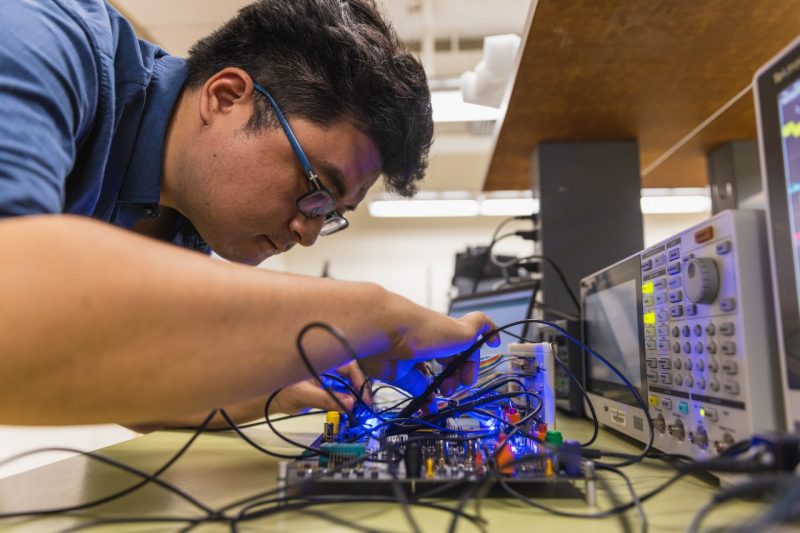
The ICTQual AB Level 6 International Diploma in Electronics Engineering is a comprehensive three-year, 360-credit programme designed to equip learners with advanced technical knowledge, practical expertise, and strategic skills in electronics engineering and related technologies. This internationally recognised qualification is suitable for both freshers seeking to enter the electronics and engineering sector and professionals aiming to enhance their technical competence, design skills, and problem-solving capabilities.
Learners will explore a broad spectrum of topics, including circuit design, digital and analogue electronics, microcontrollers, embedded systems, communication technologies, power electronics, and instrumentation. The curriculum integrates theoretical instruction with hands-on laboratory work, simulation-based exercises, and project-based learning, ensuring learners develop the skills required to design, implement, and maintain complex electronic systems.
This programme offers substantial professional value by preparing learners for critical roles in electronics design, systems engineering, instrumentation, robotics, telecommunications, and embedded technology development. With global demand for skilled electronics engineers rising, learners gain a qualification that enhances employability, supports career progression, and enables them to contribute effectively to innovative engineering projects.
Key benefits of the course include developing expertise in circuit analysis, electronic system troubleshooting, embedded system programming, signal processing, and automation technologies, while also mastering professional project management and technical communication skills. The learner-focused design allows individuals to balance theoretical learning, practical work, and applied projects while gaining experience with industry-standard tools and methodologies.
Upon completion of the ICTQual AB Level 6 International Diploma in Electronics Engineering, learners will possess the technical competence, analytical skills, and leadership capabilities required to excel in the electronics engineering sector, manage complex projects, and pursue advanced operational, managerial, or consultancy roles in national and international industries.
Entry Requirements
To enrol in ICTQual AB Level 6 International Diploma in Electronics Engineering, learner must meet the following entry requirements:
- Age Requirement: Learners must be at least 18 years old at the time of registration.
- Educational Background:A Level 5 qualification or equivalent in electronics, electrical engineering, telecommunications, or related technical disciplines is recommended.Learners with a Level 4 qualification combined with relevant professional experience may also be considered.
- Professional Experience: While freshers can enrol, learners with 1–3 years of experience in electronics, instrumentation, embedded systems, or related fields will benefit from practical and project-based components.
- English Proficiency: Since the programme is delivered in English, learners must demonstrate proficiency in English through an internationally recognised qualification (e.g., IELTS 6.0 or equivalent) or evidence of prior study/work in an English-speaking environment.
- Additional Requirement: Learners should have access to a computer, internet connection, and basic electronics tools for practical exercises and simulation software.
Study Units
This qualification, the ICTQual AB Level 6 International Diploma in Electronics Engineering, consists of 36 mandatory units.
Year 1 – Foundation in Electronics Engineering
- Principles of Electrical and Electronics Engineering
- Introduction to Circuit Theory
- Digital and Analogue Electronics Fundamentals
- Electronic Components and Devices
- Fundamentals of Signal Processing
- Introduction to Microcontrollers and Embedded Systems
- Health, Safety, and Environmental Awareness
- Electrical Measurement and Instrumentation
- Laboratory Techniques in Electronics
- Technical Report Writing
- Introduction to Simulation and Design Software
- Basics of Power Electronics
Year 2 – Intermediate Electronics Engineering
- Advanced Circuit Design and Analysis
- Embedded System Programming
- Communication Systems Fundamentals
- Sensors, Transducers, and Instrumentation
- Power Electronics and Motor Control
- Microprocessor Architecture and Applications
- Process Control and Automation in Electronics
- Data Acquisition and Signal Conditioning
- Project Planning and Technical Communication
- Quality Control and Assurance in Electronics Systems
- Advanced Laboratory Techniques
- Electronics Standards, Safety, and Compliance
Year 3 – Advanced Electronics Engineering
- Advanced Embedded Systems and IoT Applications
- Robotics and Automation Systems
- Advanced Signal Processing Techniques
- Wireless and Telecommunication Systems
- Electronic System Design and Optimisation
- Power Systems and Renewable Integration
- Risk Assessment and Safety in Electronics Projects
- Advanced Laboratory Experiments and Testing
- Supply Chain and Logistics in Electronics Industry
- Capstone Project in Electronics Engineering
- Professional Development and Leadership in Engineering
- Strategic Decision-Making in Electronics Projects
Future Progression
Completing the ICTQual AB Level 6 International Diploma in Electronics Engineering equips learners with advanced technical knowledge, practical expertise, and strategic skills, opening doors to a wide range of career opportunities in the global electronics and engineering sector. This programme is designed to benefit both freshers and professionals seeking career advancement in electronics, embedded systems, and telecommunications.
Career Opportunities
Learners can progress into specialised roles, including:
- Electronics Engineer – Designing, developing, and maintaining electronic systems and devices.
- Embedded Systems Developer – Creating and programming microcontroller-based systems for industrial or consumer applications.
- Telecommunication Engineer – Working on communication networks, wireless systems, and signal processing.
- Instrumentation and Control Specialist – Implementing monitoring and control systems for industrial applications.
- Power Electronics Engineer – Optimising electronic systems for power conversion and energy efficiency.
Advanced Professional Roles
With comprehensive technical knowledge, learners can advance to:
- Project Leadership Positions – Leading electronics and embedded system development projects.
- Technical Consultancy – Providing expertise in electronics design, automation, and system integration.
- Operational Management Roles – Overseeing teams and operations in electronics manufacturing, energy, or automation sectors.
Industry Specialisation and Credentials
The qualification also enables learners to:
- Pursue professional certifications in electronics design, embedded systems, or telecommunications.
- Gain industry memberships enhancing credibility and recognition.
- Access specialised training programmes in IoT, robotics, and automation technologies.
Strategic and Leadership Skills
Learners develop:
- Analytical and decision-making abilities for complex electronics and engineering projects.
- Leadership and teamwork skills for multidisciplinary initiatives.
- Innovation and technology awareness to contribute to cutting-edge electronics solutions.
Long-Term Career Growth
- Enhanced employability in electronics, telecommunications, embedded systems, and automation industries globally.
- Opportunities to take on senior operational, managerial, or consultancy roles.
- Preparedness for continuous professional development and evolving technological demands.
Contact for Registration
Phone: +92 312 5077348
info@tajinstitute.com.pk